Broken Things by Lauren Oliver

Synopsis:


It’s been five years since Summer Marks was brutally murdered in the woods.

Everyone thinks Mia and Brynn killed their best friend. That driven by their obsession with a novel called The Way into Lovelorn the three girls had imagined themselves into the magical world where their fantasies became twisted, even deadly.

The only thing is: they didn’t do it.

On the anniversary of Summer’s death, a seemingly insignificant discovery resurrects the mystery and pulls Mia and Brynn back together once again. But as the lines begin to blur between past and present and fiction and reality, the girls must confront what really happened in the woods all those years ago—no matter how monstrous.


Rating: 🌟🌟🌟🌟🌟


PSA: this has gay girls in it!!! Y'all get on this!!!

It's interesting, whenever I pick up a fantasy book, I usually know from reviews beforehand if the novel has LGBT+ characters. But for some reason, with contemporary/mystery/thriller books, I have no idea until I see it explicitly on the page. This has happened to me with three different novels and I really think the universe has given me a sixth sense for finding gay girls in contemporaries.

Surprise gay girls aside, Broken Things was really not what I expected. I'm not a big contemporary reader and I really wasn't a fan of Lauren Oliver's Before I Fall, so I was a little nervous going into this. But I can sincerely say I loved this with my whole heart. It hit on a lot of things I've experienced in my own life and made me feel seen in a way almost no other contemporaries have.

Books with dead girls always tend to romanticize them, always painting them as beautiful, tragic, innocent but still sexual. And while Summer is all those things at first, as the novel progresses, the reader is given such a full picture of who she really was that by the end, she's human. But this book isn't about Summer, not really. This is a book for the living. This is a book about Mia and Brynn and all the people that orbited Summer before her death, and how their lives have been touched and changed by her. The mystery of who killed Summer is important to the book, but this novel is really about toxic friendships, feeling broken, and healing from trauma.

Despite the synopsis, this novel doesn't actually have any fantasy or magical realism elements. Everything is firmly grounded in reality, but it still reads as if magic exists. As if other worlds exist alongside reality. I loved how Oliver explored the power of imagination and creativity in this, to the point where whimsy felt woven into reality. Lovelorn didn't just feel like something dreamed up by these girls, but tangible. It reminded me a lot of how I played pretend as a kid and this novel brought back that magic for me.

I was iffy about Oliver's work before, but since finishing Broken Things, I'm definitely more interested in reading her other novels. Lauren Oliver's characters were flawed but very lovable, her prose was easy-to-read but engaging, and this story touched me like almost no contemporaries have. If you're a big YA fantasy reader, I think this contemporary story may appeal to you.

Spinning Silver by Naomi Novik

Synopsis:


Miryem is the daughter and granddaughter of moneylenders, but her father's inability to collect his debts has left his family on the edge of poverty--until Miryem takes matters into her own hands. Hardening her heart, the young woman sets out to claim what is owed and soon gains a reputation for being able to turn silver into gold.

When an ill-advised boast draws the attention of the king of the Staryk--grim fey creatures who seem more ice than flesh--Miryem's fate, and that of two kingdoms, will be forever altered. Set an impossible challenge by the nameless king, Miryem unwittingly spins a web that draws in a peasant girl, Wanda, and the unhappy daughter of a local lord who plots to wed his child to the dashing young tsar.

But Tsar Mirnatius is not what he seems. And the secret he hides threatens to consume the lands of humans and Staryk alike. Torn between deadly choices, Miryem and her two unlikely allies embark on a desperate quest that will take them to the limits of sacrifice, power, and love.


Rating: 🌟🌟🌟🌟🌟


I honestly can't believe this was written by the same author of Uprooted. Spinning Silver is literally the anti-thesis of Uprooted. Everything I hated about Uprooted - the weak characters, unnecessary romance, and poor pacing - are so vastly improved in Spinning Silver, it's like it was written by a different person.

God, where do I even begin? I LOVED this. The three main female characters - Miryem, Wanda, and Irina - are each so complex and dynamic, to the point where I enjoyed reading every single one of their POVs. Even if not all of their problems or goals are world-ending, they're so excellently executed that Novik makes you feel the weight and anxiety of every issue the same. In fantasy, authors tend to focus in on the BIG stakes, and I appreciated the attention paid to smaller-scale problems, without compromising the larger narrative or making characters feel irrelevant. Novik even made me love nearly every single side character, and when does that ever happen? I may fall in love with maybe one or two especially compelling side characters, but almost ALL OF THEM??? I'd have told you it couldn't be done, before reading this.

The thing that definitely took me by the most surprise is that there's no romance in this novel. There are possibilities of romance littered throughout the book, but it's always brushed away in order to stress the importance of the characters and their journeys. I wasn't expecting it at all, especially after reading Uprooted, and it was such a pleasant surprise. But because I loved all the characters so much, I almost wish the reader did see more romance? At least towards the end, when it made sense. I trust Novik now to strike a really good balance between an attention-demanding plot and a well-developed romance.

I didn't think the writing in Uprooted was anything special, but Novik really shows her skill in Spinning Silver. I almost never enjoy multi-POV books written in first person, because every character has the same voice. But Novik writes in at least six POVs over the course of the novel, and they all sound distinct and different. What??? HOW??? As a writer myself, I'm honestly amazed!!! Like damn, I wanna be able to write like that!!! I've never enjoyed first person POVs so much before.

Also can we also talk about how Novik NAILED the fairy tale vibes in this book?? Uprooted felt really contrived and somewhat generic, but Spinning Silver really excels in borrowing from the Rumpelstiltskin story, while still doing something really unique. The throwback elements are there, but surrounded by a plot, world, and characters that feel very original. Novik organically blends the familiar conventions of fairy tales with such a strong world and characters that the whole thing feels fresh and inventive.

The pacing is also much improved from Uprooted, I think because everything that drives the story - the characters, world, and plot - are much better developed and more interesting. Novik still manages to pack a ton into this novel, but the story reads more seamlessly than Uprooted, which felt like it was split into three distinct parts. I do think the story as a whole feels like it's a little slow-paced, but it's more that Novik gives the illusion of being slow-paced when actually the novel passes you by very quickly. Spinning Silver clocks in at almost 500 pages, and I wanted more when I got to the end.

I can't believe how much I enjoyed this! If you didn't like Uprooted, I highly recommend giving this a try. There's a lot to love here.

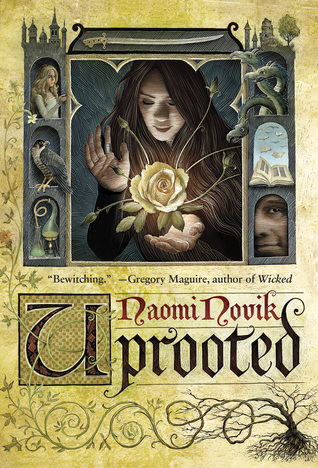
Uprooted by Naomi Novik

Synopsis:


Agnieszka loves her valley home, her quiet village, the forests and the bright shining river. But the corrupted Wood stands on the border, full of malevolent power, and its shadow lies over her life.

Her people rely on the cold, driven wizard known only as the Dragon to keep its powers at bay. But he demands a terrible price for his help: one young woman handed over to serve him for ten years, a fate almost as terrible as falling to the Wood.

But Agnieszka fears the wrong things. For when the Dragon comes, it is not Kasia he will choose.


Rating: 🌟🌟


Imagine all the tired YA tropes and pair them with slightly better writing and plot than you usually get out of a generic YA fantasy novel, and you get Uprooted.

My biggest issue is how immature the whole novel comes off as. From the characters, to the plot, even the magic system and antagonist lack the depth I've come to expect from adult fantasy. I respect the cross-over potential this novel has, and I do think it's perfect for readers that want to start venturing out of YA and into the adult genre. But as someone that reads both YA and adult, I don't think it's particularly compelling for either genre.

The characters were easily the most disappointing part of this book. Agnieszka has the personality of a piece of cardboard, and feels so typically YA fantasy heroine. I think the first person perspective especially hindered her narrative. It's much more difficult to express a character's personality if the reader is constantly in their head and they don't have an especially strong voice. A third person perspective would've done wonders for making her character feel less bland.

The Dragon is just straight up poorly written. The Dragon has no complexity, which doesn't translate to an immortal character. He's lived for over a century, yet the reader never feels the years weighing down on him. His impatience with Agnieszka just comes off as him being an asshole, and his constant use of "idiot" flashed me back to my middle school anime phase so fast I still have whiplash. I have no idea why Agnieszka is attracted to him. There's no mystery to him that makes him alluring, nor does Naomi Novik paint an especially compelling picture of his physical features. I couldn't tell you what he looks like, besides having eyes and hair.

I sincerely believe Kasia should have been the main character. Though she starts off as the cliche best friend, she quickly becomes the most interesting character. She's subversive of the character trope she's meant to represent, and overall just does some really cool stuff over the course of the novel. The fact that she's a side character, yet overshadows the main cast, says a lot about the novel.

Because I didn't like Agnieszka or the Dragon as characters, I probably would've dnfed this book if it had followed the set-up of the synopsis. But the synopsis only represents about 1/3 of the book, and the second and third parts go in entirely different directions. I have mixed feelings about it, because the synopsis is what drew me in, but then I wouldn't have been able to finish the novel. But I also didn't especially enjoy the plot progression, and the pacing felt very off. Novik packed SO MUCH into this novel, yet I still felt like I was dragging myself through this.

I just expected so much more from Uprooted. None of the elements shine, or do anything especially original. If you're looking for an adult fantasy with fairy tale vibes, I recommend checking out The Bear and the Nightingale by Katherine Arden instead.

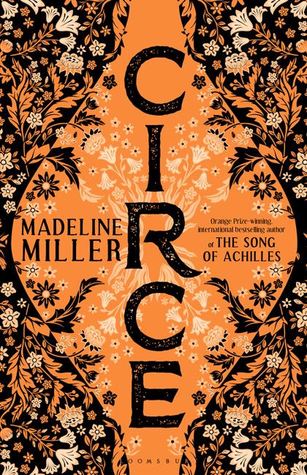
Circe by Madeline Miller

Synopsis:


In the house of Helios, god of the sun and mightiest of the Titans, a daughter is born. But Circe has neither the look nor the voice of divinity, and is scorned and rejected by her kin. Increasingly isolated, she turns to mortals for companionship, leading her to discover a power forbidden to the gods: witchcraft.

When love drives Circe to cast a dark spell, wrathful Zeus banishes her to the remote island of Aiaia. There she learns to harness her occult craft, drawing strength from nature. But she will not always be alone; many are destined to pass through Circe's place of exile, entwining their fates with hers. The messenger god, Hermes. The craftsman, Daedalus. A ship bearing a golden fleece. And wily Odysseus, on his epic voyage home.

There is danger for a solitary woman in this world, and Circe's independence draws the wrath of men and gods alike. To protect what she holds dear, Circe must decide whether she belongs with the deities she is born from, or the mortals she has come to love.


Rating: 🌟🌟🌟🌟


I'm in awe of Madeline Miller. Retellings usually don't appeal to me, but I think Miller captures the heart of Greek mythology and tells the stories in a way that fills her audience with the same sense of wonder that the original myths did a millennia ago. Though the myths have been preserved and translated through time, I think the writing style is too dated to accurately convey the same feelings the ancient Greeks experienced. Of course, I'm sure scholars and lovers of Greek myth would disagree with me, but for the majority of readers, Greek mythology just isn't accessible. Through Miller's modern prose, she refreshes all the legends without diluting the essence of it.

Circe is excellent. Circe's narration throughout the novel is gorgeously written and super feminist. Even when she feels strongly about things, Circe's voice remains just detached enough to convey the eternity that weighs down on her and obscures the passage of time. It really makes Miller's skill as a writer shine. However, no matter how much I respect that writing technique, it did make me enjoy the story less. Circe's distance from everything made all of her experiences hit me less powerfully, and I didn't have the same emotional investment in her and her story as I did Patroclus and Achilles in The Song of Achilles.

The story also dragged a bit for me, even though I understand its intention to show how long Circe's life is. I don't mind slow books, but between the detached narration and wandering plot, it made me feel less invested than I know I could've been. Again, it's the nature of the story Miller set out to tell, so my complaints ultimately come down to personal preference, rather an issue with the novel's quality.

Though I liked Miller's freshman novel The Song of Achilles more, her sophomore novel Circe is undeniably a gem of fantasy and one of the best modern retellings a reader can put their hands on.

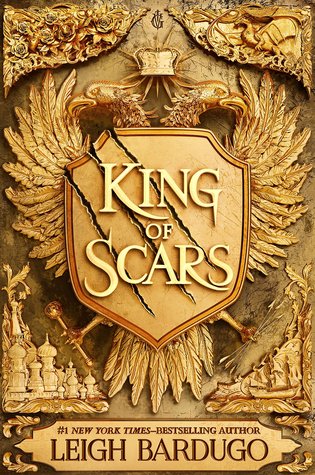
King of Scars (Nikolai Duology, #1) by Leigh Bardugo

Synopsis:


Nikolai Lantsov has always had a gift for the impossible. No one knows what he endured in his country’s bloody civil war—and he intends to keep it that way. Now, as enemies gather at his weakened borders, the young king must find a way to refill Ravka’s coffers, forge new alliances, and stop a rising threat to the once-great Grisha Army.

Yet with every day a dark magic within him grows stronger, threatening to destroy all he has built. With the help of a young monk and a legendary Grisha Squaller, Nikolai will journey to the places in Ravka where the deepest magic survives to vanquish the terrible legacy inside him. He will risk everything to save his country and himself. But some secrets aren’t meant to stay buried—and some wounds aren’t meant to heal.


Rating: 🌟🌟🌟🌟


Let's get something straight right off the bat: this is the sequel to both the Grisha trilogy and Six of Crows duology, which means you need to read the Grisha trilogy before reading this. The Grisha trilogy and the Six of Crows duology both served as entry points into Leigh Bardugo's world, and King of Scars is a marriage of both - the politics and mythology of the Grish trilogy and the heist and spywork of the Six of Crows duology.

I didn't realize how badly I missed the Grishaverse until I started reading. I missed this world and these characters like crazy! Being back in Ravka with so many familiar faces really highlights how much Bardugo has grown as a writer and a storyteller since the Grisha trilogy. The Grisha trilogy will always have a special place in my heart for being my favorite books when I was a teenager, but they haven't aged well. King of Scars takes everything that was good about the Grisha trilogy - the mythology, the politics, and the world-building - and makes it better.

From what people have said, I expected Nina's story to feel more disconnected from Nikolai and Zoya's, but Bardugo did an excellent job of weaving Nina's story and the spirit of the Six of Crows duology into Nikolai and Zoya's stories without compromising either narrative. While I think the abrupt switch in POVs can be a bit jarring at times, I think Nina's story complements Nikolai's and Zoya's stories well.

However, I do think Nikolai's story was buried by Nina's and Zoya's. For a duology focused on Nikolai, I felt Nina's and Zoya's chapters were more engaging, and even Isaak's chapters filled me with a greater sense of excitement than Nikolai's did. Have I just fallen out of love with Nikolai? He was my favorite character when I read the Grisha trilogy as a teen, but since revisiting it, I found myself more interested in the Darkling and Genya, even Alina herself. I wonder if, because I loved Nikolai so much in the past, his character just isn't as compelling to me.

My least favorite part of King of Scars was by far the slow pacing. The beginning, especially the first 100 pages or so, was incredibly slow. I felt very similarly about Six of Crows, so it may just be how Bardugo will write her books from now on, by sacrificing pacing in exchange for a more solid set-up. But once the plot did pick up, oh MAN did it pick up.

So let's talk about that ending. Without getting into spoiler territory, the ending didn't really surprise me? I expected to be SHOOK over the ending, but there was so much foreshadowing at it in the last 200 pages of the book that it really came as no surprise at all. I think it's definitely a questionable choice, however, especially in how it compromises the original ending of the Grisha trilogy. It makes the Grisha trilogy feel a lot more like "so what?" and that's kind of disappointing. If there hadn't been so many references to the Grisha trilogy in this novel, I would've suspected Bardugo was trying to divorce the Grisha trilogy from the family and have us forget about her.

Overall, I didn't love this novel, but enjoyed it a lot nonetheless and am eagerly awaiting the sequel.

The Glass Spare (The Glass Spare #1) by Lauren DeStefano

Synopsis:


Wil Heidle, the only daughter of the king of the world’s wealthiest nation, has grown up in the shadows. Kept hidden from the world in order to serve as a spy for her father—whose obsession with building his empire is causing a war—Wil wants nothing more than to explore the world beyond her kingdom, if only her father would give her the chance.

Until one night Wil is attacked, and she discovers a dangerous secret. Her touch turns people into gemstone. At first Wil is horrified—but as she tests its limits, she’s drawn more and more to the strange and volatile ability. When it leads to tragedy, Wil is forced to face the destructive power within her and finally leave her home to seek the truth and a cure.

But finding the key to her redemption puts her in the path of a cursed prince who has his own ideas for what to do with her power.

With a world on the brink of war and a power of ultimate destruction, can Wil find a way to help the kingdom that’s turned its back on her, or will she betray her past and her family forever?


Rating: 🌟🌟

2.5 stars.

Red Queen, Throne of Glass, and Shadow and Bone called, and they said they'd like their plots back.

The Glass Spare reads like Lauren DeStefano played generic YA fantasy novel bingo one night, and then decided to shove it all into her novel. Main character is a princess? Check. Main character has unexplained special powers that no one else has? Check. She's forced to team up with a swoony male love interest who isn't affected by her powers? Check and check.

I didn't think it was possible for any novel's world-building to be even more of a clusterfuck than The Selection series. At least with The Selection, the whole thing was so bad that I could let my eyes glaze over and pretend I didn't see all glaring inconsistencies. But The Glass Spare isn't an overall trash fire. The writing is great, and I actually really enjoyed the way the characters interacted. So what the hell happened to the world-building?

At first glance, the world seems like your generic medieval fantasy Europe. But then Wil starts talking about trains and electricity and RIBOFLAVIN??? Y'ALL KNOW WHAT THAT IS?????? And the world-building just starts to collapse in on itself. How technologically advanced is this world? How easy is this technology to access for the average person? Why are alchemy and magical curses a thing, alongside 1900s technology? Why does every kingdom still have a monarchy? I have a lot of questions, but no answers even after 400 pages.

Which, speaking of the novel's length, this book is over 400 pages long but nothing really happens? It takes about 150 pages to even get to what's laid out in the synopsis, which already told me the pacing wouldn't be great. We spend those first 150 pages with Wil and her family, who are overall such generic archetypes that I didn't care about any of them. Wil's mother is the only vaguely interesting one, but gets discounted so often due to her "superstitious" nature that I could tell the novel wasn't going to let her be an interesting, complex character beyond the "crazy mom" trope.

So, why give it 2.5 stars then? Because I didn't hate it. The writing actually appealed to me a lot, to the point where I plan to pick up DeStephano's other novels. Her writing is more literary in tone, so I can see why it would turn off other readers, but I thoroughly enjoyed it. It made the novel quick to get through, even if I was bored much of time. I also enjoyed how Wil, Loom, and Zay interacted, again mostly due to how the writing shaped their relationships.

But other than that? The novel as a whole is just so unremarkable. If The Glass Spare had even a lick of originality, I probably would've really liked it.

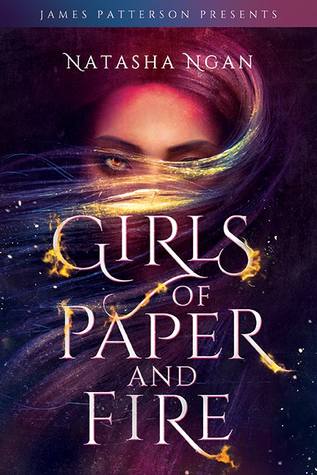
Girls of Paper and Fire (Girls of Paper and Fire, #1) by Natasha Ngan

Synopsis:


Each year, eight beautiful girls are chosen as Paper Girls to serve the king. It's the highest honor they could hope for...and the most cruel.

But this year, there's a ninth girl. And instead of paper, she's made of fire.

In this lush fantasy, Lei is a member of the Paper caste, the lowest and most oppressed class in Ikhara. She lives in a remote village with her father, where the decade-old trauma of watching her mother snatched by royal guards still haunts her. Now, the guards are back, and this time it's Lei they're after--the girl whose golden eyes have piqued the king's interest.

Over weeks of training in the opulent but stifling palace, Lei and eight other girls learn the skills and charm that befit being a king's consort. But Lei isn't content to watch her fate consume her. Instead, she does the unthinkable--she falls in love. Her forbidden romance becomes enmeshed with an explosive plot that threatens the very foundation of Ikhara, and Lei, still the wide-eyed country girl at heart, must decide just how far she's willing to go for justice and revenge.


Rating: 🌟🌟🌟🌟🌟


Oh my goodness gracious, I LOVED THIS!!! From the setting, to the atmosphere of the world, to the f/f romance, I adored just about everything in this book. I think Natasha Ngan just claimed a spot on my auto-buy authors list.

What's most striking to me about this novel is how self-aware it is. Based on the synopsis, this novel fools you into thinking it'll be yet another YA fantasy where the main character, Lei, falls in love with her abuser, the Demon King. But where many other YA novels have romanticized such relationships, Ngan subverts expectations entirely: the abuser is rightfully villainized, and instead romance blooms between two of his Paper Girls. By having the f/f romance happen specifically between two of the Paper Girls, Ngan also overturns the anticipated girl hate between competitors perpetuated by earlier YA novels like The Selection. Over the course of the novel, Ngan goes out of her way to show the ways in which each Paper Girl is complex and layered. When girl-on-girl hate does happen, the reader understand the motivations behind the Paper Girl's actions, rather than villianizing her just because she's female.

Additionally, I really enjoyed Ngan's commentary surrounding LGBT+ issues. Throughout the story, Lei makes subtle comments about how m/m relationships tend to be more accepted and anticipated, even if still looked down upon by the society, while f/f relationships are entirely taboo. Because I see this in my own life - and especially in publishing - the LGBT+ rep felt authentic to me. Ngan knows how her book fits into conversations around queer representation.

This is probably my favorite Asian-inspired world to date. Ngan's imagery is so lush, and made the atmosphere deliciously immersive. Usually, when I'm reading a book I'm loving, I can't help but fly through the pages. But the world of Girls of Paper and Fire was so beautifully crafted on an aesthetic level that I couldn't help but savor every page. It's a deception, but gosh is it a beautiful deception.

And the romance? Oh, don't even get me started on how much I adored it. I could wax poetic about it, shout to the stars about it. I won't get into any spoiler territory, but this is my favorite f/f romance I've read to date. As a bisexual woman, it made me feel seen. I love both of the characters, and I love the way in which their relationship develops.

I cannot wait until the second book!

The Hod King (The Books of Babel #3) by Josiah Bancroft

Synopsis:


Fearing an uprising, the Sphinx sends Senlin to investigate a plot that has taken hold in the ringdom of Pelphia. Alone in the city, Senlin infiltrates a bloody arena where hods battle for the public's entertainment. But his investigation is quickly derailed by a gruesome crime and an unexpected reunion.

Posing as a noble lady and her handmaid, Voleta and Iren attempt to reach Marya, who is isolated by her fame. While navigating the court, Voleta attracts the unwanted attention of a powerful prince whose pursuit of her threatens their plan.

Edith, now captain of the Sphinx's fierce flagship, joins forces with a fellow wakeman to investigate the disappearance of a beloved friend. She must decide who to trust as her desperate search brings her nearer to the Black Trail where the hods climb in darkness and whisper of the Hod King.

As Senlin and his crew become further dragged in to the conspiracies of the Tower, everything falls to one question: Who is The Hod King?


Rating: 🌟🌟🌟🌟🌟


Is it too early to say this is my favorite book of the year? If the mood of the first two books was "oh man I can't put this down, I have to find out what happens next," The Hod King is hands-down EVERYTHING BAD THAT COULD HAPPEN IS HAPPENING RIGHT NOW.

Basically, I was white-knuckled on the book the entire time I was reading it.

Josiah Bancroft never ceases to amaze me with his originality. I swear, this man is a bottomless well of creativity. His world-building never stagnates. He never settles into the comfort of this incredible world he's created. With every novel, the Tower becomes ever more complex and detailed. Whatever brain food diet Bancroft is on, I want some.

Unlike Senlin Ascends or Arm of the Sphinx, the majority of this installment takes place in Pelphia, the fifth ringdom. Even though the location is consistent, Pelphia continues to evolve over the course of the novel as the characters experience different facets of its society. Pelphia demonstrates the worst of what "court culture" can be, filled to the brim with the rich and idle. Yet despite the exploitative and sometimes downright evil nature of the scandal-obsessed society, the grotesque never felt graphic. I'm a big fan of dark fantasy, and I think it takes a lot of skill to be able to communicate the same level of moral bankruptcy without doing so in an especially stomach-churning way. Bancroft masterfully balances the reader's sense of whimsy with the reality of the wickedness that occurs within Pelphia and the Tower at large.

I also thought the structure of The Hod King to be especially compelling. Unlike most ensemble narratives that consistently rotate POVs, this novel is split into three main acts (and a mini act at the end), each featuring POVs from a specific set of characters. This structure is especially successful because of how each act is built. Each ends on the sort of cliff-hanger that had me flipping forward to find out when I would be back with that character. But then the next act would build up to a cliff-hanger just as intense, and all I wanted to do was find out what happened to THAT character. It was horrible for my anxiety and you better believe I loved every goddamn minute of it.

Also can we talk about how there's a f/f relationship in this?? Between two middle-aged women??? When does that EVER happen, especially in fantasy?????? JOSIAH BANCROFT WENT THERE. HE DID THAT FOR US.

Overall, I'm just in awe of this series. Each book is so incredible, and none of the installments ever demonstrate a dip in quality. The prose is clever and whimsical, the characters are wildly realistic, and the world-building is just of such a high caliber it makes me want to weep. I cannot recommend these books enough. I know plenty of people with more authority and several years of life on me have already said this, but sincerely, these books are classics and I adore them with all my heart. You better believe that I'm going to get up at some ungodly hour and order that Anderida Books edition as soon as it's announced.

Also, I still love Byron and would give my left leg to protect him at all costs.

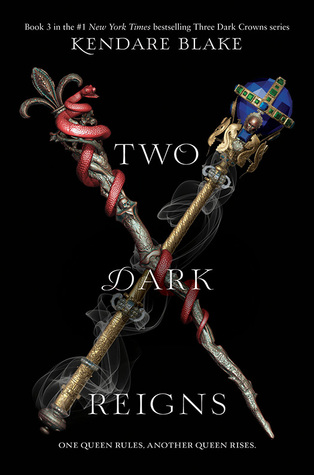
Two Dark Reigns (Three Dark Crowns, #3) by Kendare Blake

Synopsis:


Queen Katharine has waited her entire life to wear the crown. But now that she finally has it, the murmurs of dissent grow louder by the day. There’s also the alarming issue of whether or not her sisters are actually dead—or if they’re waiting in the wings to usurp the throne.

Mirabella and Arsinoe are alive, but in hiding on the mainland and dealing with a nightmare of their own: being visited repeatedly by a specter they think might be the fabled Blue Queen. Though she says nothing, her rotting, bony finger pointing out to sea is clear enough: return to Fennbirn.

Jules, too, is in a strange place—in disguise. And her only confidants, a war-gifted girl named Emilia and her oracle friend Mathilde, are urging her to take on a role she can’t imagine filling: a legion-cursed queen who will lead a rebel army to Katharine’s doorstep.

This is an uprising that the mysterious Blue Queen may have more to do with than anyone could have guessed—or expected.

Rating: 🌟🌟🌟🌟


This is by far the best book of the series thus far. It fixed all of my issues with the previous books, mainly the slow pacing of One Dark Throne and how deeply I disliked Arsinoe and Jules as characters.

In my review of the previous book, I explained that I felt like Arsinoe felt more like a device to make Jules's narrative relevant to the story than an actual character. Together, I just found them insufferable. But in Two Dark Reigns, they spend the majority of the novel separate and HOLY CRAP did it make a difference. Separating Arsinoe and Jules is hands down the best decision Kendare Blake has made for this entire series.

Without Jules as a crutch, Arsinoe became an actual character! Granted, she still didn't quite feel "full" because she's deeply connected to the Blue Queen, but she had a heck of a lot more presence than when she was with Jules. Jules, on the other hand, has always been by far my least favorite main character (though Joseph still takes the cake for least fav character overall). But I daresay I liked her in this novel? Without her dedication to Arsinoe and constant pining after Joseph, she finally had a personality beyond them, and more focus was given to who she actually is as a person. I thought Jules was an interesting deconstruction of the "chosen one" trope, with her uncertainty and outright rejection of being lifted up as the Legion Queen.

The pacing, and thus plot, were also significantly improved in this novel. While I thought the slow pacing of Three Dark Crowns did a fantastic job at building suspense, it made One Dark Throne so boring. In Two Dark Reigns, the pacing picked up to its fastest yet, which meant there was significantly more plot. Gone are the days spent meandering about Wolf Spring, in favor of a rising rebellion with a false queen, killing mist, and the ghost of the Blue Queen of legend.

I'm so glad that Kendare Blake was given the opportunity to add more onto this series. If it had just been the duology, honestly, I would've been disappointed, between the slow pacing and annoying and/or underdeveloped characters Two Dark Reigns was a much-needed addition to this series - almost necessary, I'd argue.

I read the preview of Four Dead Queens by Astrid Scholte

Synopsis:


Seventeen-year-old Keralie Corrington may seem harmless, but she's, in fact, one of Quadara's most skilled thieves and a liar. Varin, on the other hand, is an honest, upstanding citizen of Quadara's most enlightened region, Eonia. He runs afoul of Keralie when she steals a package from him, putting his life in danger. When Varin attempts to retrieve the package, he and Keralie both find themselves entangled in a conspiracy that leaves all four of Quadara's queens dead.

With no other choices and on the run from Keralie's former employer, the two decide to join forces, endeavoring to discover who has killed the queens and save their own lives in the process. When their reluctant partnership blooms into a tenuous romance, they must overcome their own dark secrets in hopes of a future together that seemed impossible just days before. But first they have to stay alive and untangle the secrets behind the nation's four dead queens.


Rating: 🌟🌟🌟🌟


Netgalley has a free preview available to read, so I gave it a go.

I'm pleasantly surprised. Four Dead Queens isn't set in a stereotypical medieval European-inspired fantasy world. Its medicine and technology are advanced, but only in certain regions. The balance between the traditional fantasy-medieval regions and the more dystopian-esque technologically and medically savvy regions is intriguing. Astrid Scholte seems to capture the best of both worlds in only one world, creating this fantasy-dystopia mash-up that, unlike Victoria Aveyard's Red Queen series, so far holds up.

The writing seems a little on-the-nose at times, but the pacing and prose are good, even if there is info-dumping. I like Keralie as a character, though I do think Varin outshines her so far. Keralie seems a little too stereotypically "badass female character," whereas Varin isn't the swaggering, cocky male character YA tends to favor, automatically making him a more interesting character to me.

Overall, this preview surprised me and enticed me to pick up the novel upon release.