The Girl King by Mimi Yu

Synopsis:


All hail the Girl King.

Sisters Lu and Min have always understood their places as princesses of the Empire. Lu knows she is destined to become the dynasty's first female ruler, while Min is resigned to a life in her shadow. Then their father declares their male cousin Set the heir instead—a betrayal that sends the sisters down two very different paths.

Determined to reclaim her birthright, Lu goes on the run. She needs an ally—and an army—if she is to succeed. Her quest leads her to Nokhai, the last surviving wolf shapeshifter. Nok wants to keep his identity secret, but finds himself forced into an uneasy alliance with the girl whose family killed everyone he ever loved…

Alone in the volatile court, Min's hidden power awakens—a forbidden, deadly magic that could secure Set's reign…or allow Min to claim the throne herself. But there can only be one Emperor, and the sisters' greatest enemy could turn out to be each other.


Rating: 🌟🌟🌟


ARC provided by Bloomsbury via Netgalley in exchange for my honest thoughts and review.

It was okay. The Girl King doesn't have any glaringly bad issues, but neither does it do anything particularly remarkable. I know this story. I've read it a hundred times before. This is a book about a princess trying to reclaim her kingdom, and the only difference is that it's not in a European-inspired setting.

The highlight of this book for me was Min. Min isn't a character I see often in YA, and so I was especially drawn to her. She's frustrating. She allows herself to constantly be pushed around and used by others, and never stands up for herself. But because of her inaction and lack of will, it built my sense of suspense for when she would finally push back. And when she did, oh, it was satisfying as hell.

Lu was super disappointing for me. Lu is the same character we've been seeing since Divergent or Throne of Glass: the badass female character who is so impulsive and full of pride that her personality always puts her in danger. She lacked nuance to set her apart from the heaping pile of #strong female characters in YA, making her instantly forgettable and generic.

Nok was...fine? He wasn't the hyper-masculine YA love interest, which was refreshing, but overall I just found his character bland. His chapters bored me. His chapters bored me worse once the insta-love kicked in. Yup, that's right folks, this book features the same insta-love you find in every other "princess must reclaim her throne" YA fantasy novel.

What really carried this novel, besides Min, was the writing. I find a lot of YA authors have writing that's too simple or disjointed for my tastes, but Mimi Yu's prose flowed well and the descriptions were nicely executed. While I think this book was a little too light on the world-building, enough effort was put into the writing to make its Asian-inspired world feel tangible. This isn't the paper-thin world-building you'll find in other YA fantasies. I'm still confused on the magic system, however.

My overall thoughts come down to this: if you want to read another "princes must reclaim her throne" YA fantasy novel, read this one. Don't read Throne of Glass, or To Kill a Kingdom, or another mediocre YA fantasy telling the same bland story in the same bland European setting. The Girl King is good, not great, but its Asian-inspired setting is refreshing and worth supporting its #ownvoices author for.

The Gilded Wolves (The Gilded Wolves, #1) by Roshani Chokshi

Synopsis:


Paris, 1889: The world is on the cusp of industry and power, and the Exposition Universelle has breathed new life into the streets and dredged up ancient secrets. In this city, no one keeps tabs on secrets better than treasure-hunter and wealthy hotelier, SΓ©verin Montagnet-Alarie. But when the all-powerful society, the Order of Babel, seeks him out for help, SΓ©verin is offered a treasure that he never imagined: his true inheritance.

To find the ancient artifact the Order seeks, SΓ©verin will need help from a band of experts: An engineer with a debt to pay. A historian who can't yet go home. A dancer with a sinister past. And a brother in all but blood, who might care too much.

Together, they'll have to use their wits and knowledge to hunt the artifact through the dark and glittering heart of Paris. What they find might change the world, but only if they can stay alive.


Rating: 🌟🌟


ARC provided by the publisher via Netgalley in exchange for my honest thoughts and review.

I really wanted to love this one. The premise and tone were right up my alley, and I just about combusted with excitement when I found out I was approved for an ARC.

The only thing I really liked was how diverse the main cast was. Half of the characters are PoC, and at least two are LGBT+. I've heard that one of the characters is on the autism spectrum, but I'm not familiar enough with autism to feel comfortable making a claim that one of the characters is autistic. So while this novel wins major diversity points, that's about where my enjoyment ended.

Conceptually, The Gilded Wolves is pretty unique. But the execution is just messy. This reads so much like a second book. There were too many prior events and too many previously-established relationships that I felt like I was missing key elements needed to read this book.

We're all thinking it, so let's just say it: the characters are the thrift store version of the Six of Crows characters. If you're writing a YA fantasy heist book, you can't avoid being in conversation with the SoC duology, no matter how we all want to separate new heist books from it. But the similarities between The Gilded Wolves characters and the SoC characters are just too uncanny to dismiss.

SΓ©verin and Laila are so similar to Kaz and Inej that I can't help but think it must be intentional. While the rest of the main cast felt more original, still they share too many similarities with the SoC characters. I understand some character tropes can't be avoided when writing heist story, but then I look at the Ocean's # movies and wonder why those characters don't feel similar to the SoC characters, despite being involved in a heist. Clearly, Chokshi is borrowing, whether intentionally or not, from the SoC duology.

But regardless of the similarities, ultimately Chokshi's characters are flat. Their motivations are confusing (again, this feels like a second book) and their backstories don't feel tangible enough to warrant their actions. Despite the mature tone and themes the novel tried to capture, the characters and their relationships felt juvenile. Their banter especially reflected this. It came off as childish and try-hard, without any of the natural ease I've seen other authors accomplish.

The info-dumping in the beginning was insane. Every time any vaguely new idea would come up, the entire scene would screech to a halt for at least a paragraph of exposition. It absolutely killed the pacing in the beginning. Yet despite all the info-dumping, I'm still confused on how the magic system works and how the Order of Babel is arranged.

I love it when a book feels especially ~aesthetic~, because it usually contributes to the novel's tone or world-building. The Gilded Wolves focuses heavily on aesthetics, but without actually contributing anything of substance. While of course there are outliers, most of the time the descriptions were aesthetics for the sake of aesthetics, without establishing any meaningful world-building and setting a certain tone. It made the novel feel bloated with description.

This novel reads to me like Chokshi was trying so hard to be different from SoC that she just took on way too much. None of the elements shine - not the characters, not the plot, not the writing, NOTHING except the diversity. I think publishing books with diverse characters by authors of color is extremely important, and so for that reason alone I am supremely glad this book exists and will be read by people that finally get to see themselves reflected by the page. But besides that, The Gilded Wolves isn't a compelling novel.

And that ending? Oh boy. It was drama for the sake of a second book, and didn't feel warranted at all.

The Bone Season (The Bone Season, #1) by Samantha Shannon

Synopsis:


The year is 2059. Nineteen-year-old Paige Mahoney is working in the criminal underworld of Scion London, based at Seven Dials, employed by a man named Jaxon Hall. Her job: to scout for information by breaking into people’s minds. For Paige is a dreamwalker, a clairvoyant and, in the world of Scion, she commits treason simply by breathing.

It is raining the day her life changes for ever. Attacked, drugged and kidnapped, Paige is transported to Oxford – a city kept secret for two hundred years, controlled by a powerful, otherworldly race. Paige is assigned to Warden, a Rephaite with mysterious motives. He is her master. Her trainer. Her natural enemy. But if Paige wants to regain her freedom she must allow herself to be nurtured in this prison where she is meant to die.


Rating: 🌟🌟🌟🌟


Does The Bone Season have flaws? Yes. Does it have too much confusing slag in the beginning? Yes. Does the world-building not make sense at times? Yes. Is the romance problematic? Yes.

But despite its flaws, I enjoyed the HELL out of this book. The writing was solid, the world was interesting, and Samantha Shannon built up suspense so damn well I couldn't put this book down. I have two final papers due for university next week and what did I do instead? Read The Bone Season.

Two things pleasantly surprised me: the world-building, and the relationship between Paige and Warden.

World-building is one of the things that draws me most into a story. If you've got an interesting world, my chances of enjoyment increase tenfold. While Shannon's world doesn't always make sense, you can tell there was thought behind it. She tried to make it layered and complex, and back it up with a sense of history, even if the pieces don't always fit together at times. In an age plagued by YA romances masquerading as fantasy or sci-fi, the amount of effort Shannon put into her world was refreshing, even if it feels very much like a debut novel. (This is not a YA novel, but in terms of voice and writing style, it is definitely borrowing from YA, hence my comparison.)

Part of what makes Shannon's world-building effective, despite how it fails to stand up under a microscope, is how entertaining and addicting it makes the story. Shannon nailed the tension and pacing, especially in the first half of the novel. So even when the flaws in the world-building became obvious, I was already so swept up in the world of clairvoyants and Rephaim that I was willing to overlook the flaws and enjoy the story.

Based on reviews, I knew going into this novel that Warden and Paige have a master/slave relationship. I do not condone romanticizing such a relationship at all, but I can at least appreciate that Shannon executed it in a way that made it as least icky as possible. Warden is not violent toward and does not sexually assault Paige, and when something physical does between them, it is consensual. Of course, unbalanced power dynamics will never make their relationship completely consensual, but it struck me as consensual as possible within those limits. Several other reviewers point out all the ways in which their relationship is problematic, and I agree - but despite the facts of what is done to Paige as a slave, the presentation doesn't make it feel gross and romanticized, as though Shannon has some kink for this. For me, that's the difference. I still really wish that Shannon had avoided such a problematic relationship entirely, but it didn't feel excessive and fetishistic. I thoroughly enjoyed Paige and Warden's relationship, despite its problems, and Shannon captured the tension between them excellently.

The plot and writing quality definitely started to unravel in the last hundred pages or so, but overall this was such a fun novel to read. It brought me back to my days of reading dystopia when I was a teenager, but in a refreshingly mature, more nuanced way. I also see similarities between this and SJM's early writing, before everything became snarling males and bloated novellas. While I can completely understand why the reviews are bad, I'm so glad I picked up The Bone Season.

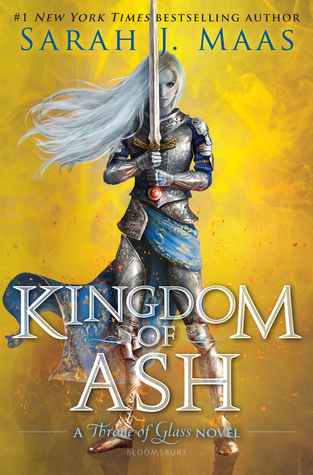
Kingdom of Ash (Throne of Glass, #7) by Sarah J. Maas

Synopsis:


Aelin has risked everything to save her people―but at a tremendous cost. Locked within an iron coffin by the Queen of the Fae, Aelin must draw upon her fiery will as she endures months of torture. Aware that yielding to Maeve will doom those she loves keeps her from breaking, though her resolve begins to unravel with each passing day…

With Aelin captured, Aedion and Lysandra remain the last line of defense to protect Terrasen from utter destruction. Yet they soon realize that the many allies they’ve gathered to battle Erawan’s hordes might not be enough to save them. Scattered across the continent and racing against time, Chaol, Manon, and Dorian are forced to forge their own paths to meet their fates. Hanging in the balance is any hope of salvation―and a better world.

And across the sea, his companions unwavering beside him, Rowan hunts to find his captured wife and queen―before she is lost to him forever.


Rating: 🌟🌟


This is by far my least favorite Throne of Glass novel.

I expected this series to end on a bang. Not necessarily that anything especially heart-breaking would happen or that any of my favs would die - because let's be honest, this is a Sarah J Maas novel and if you're white, straight, and have a mate, you're guaranteed to survive - but that the entertaining story line and fast-paced prose would reach an all-time high in this novel. With seven books of build-up, a dozen main characters, and a two-year wait, this finale should've been the best book SJM has written. Or at least one of the better ones.

Being completely honest here, I think this would probably be the worst SJM novel if ACOFAS hadn't already taken the cake.

Like I said before, I read SJM's novels because for all their problematic and trashy elements, her writing is quick and easy-to-read, and her story lines are entertaining. But this book was an absolute slog to get through. I spent the majority of the novel bored. Not only is the lack of editing on a grammatical level abysmal, but there's so. much. freaking. PADDING. There is SO MUCH that didn't need to be in this novel, from sentences to entire chapters that do almost nothing to forward the plot or characters.

There were parts that I liked. But it's a 980 page, 288,000 word book. Of course there are parts I liked. The major plot points had me turning the pages, and I especially liked portions of the final battle. But all of the good parts are buried in chapter after chapter of nothing happening. Overall, there was so much filler and unnecessary fluff that it killed any positive feelings I had towards the parts of the book where things actually happened.

I'm not going to get into all the problematic elements of this book because once again, it's SJM and we all know her books are problematic. There are better reviews that cover all of those instances in this book, and tbh I'm so tired of reading this novel I honestly don't have the energy to get #receipts.

Ugh. This was such a disappointment.

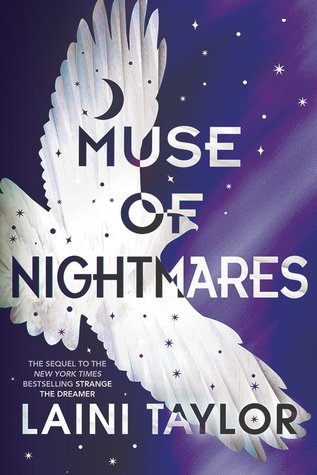
Muse of Nightmares (Strange the Dreamer #2) by Laini Taylor

Synopsis:


In the wake of tragedy, neither Lazlo nor Sarai are who they were before. One a god, the other a ghost, they struggle to grasp the new boundaries of their selves as dark-minded Minya holds them hostage, intent on vengeance against Weep.

Lazlo faces an unthinkable choice—save the woman he loves, or everyone else?—while Sarai feels more helpless than ever. But is she? Sometimes, only the direst need can teach us our own depths, and Sarai, the muse of nightmares, has not yet discovered what she's capable of.

As humans and godspawn reel in the aftermath of the citadel's near fall, a new foe shatters their fragile hopes, and the mysteries of the Mesarthim are resurrected: Where did the gods come from, and why? What was done with thousands of children born in the citadel nursery? And most important of all, as forgotten doors are opened and new worlds revealed: Must heroes always slay monsters, or is it possible to save them instead?


Rating: 🌟🌟🌟 


Unpopular opinion: I wish Nova and Kora had been the main characters of this duology.

This novel fixed a lot of my issues with Strange the Dreamer. I'm a massive fan of Laini Taylor's Daughter of Smoke and Bone trilogy, but what really made that trilogy for me was the world-building and the plot. I like Laini Taylor's characters well enough, but I think her creativity outshines her character-building. Strange the Dreamer was a miss for me because it's totally character-based. The reader knows essentially nothing about the world's mythology, Weep's history, nothing for the entire novel. The plot, too, is little to none, in favor of Lazlo and Sarai's budding romance. Muse of Nightmares finally busted out what makes Laini Taylor such a brilliant writer: her world-building, and the insane plots that occur as a result of her incredible world-building.

I truly believe that Nova and Kora should've been the stars of this duology. Without getting into spoilers territory, the two sisters are new characters introduced in this book, and play a central role in how the story unfolds. Lazlo, Sarai, and the godspawn are fine, but their story pales in comparison to the incredible journey Nova and Kora introduce. I spent an entire book with Lazlo and the gang, yet I was more invested in Nova and Kora after spending one chapter with them. By the time the details of their story were revealed, I was floored by how absolutely cool their lives were, and how trite Lazlo and co.'s entire storyline was in comparison. Lazlo and co. are just so...boring.

I remember when Laini Taylor was planning this duology, it was meant to be just Muse of Nightmares. But she felt like she was missing a key component of it, and decided to write Strange the Dreamer as a sort of "prologue" to Muse of Nightmares. I know a lot of people love this duology, especially the first book, and while I completely respect that, I think Laini Taylor not leading with Muse of Nightmares was a mistake. I almost skipped out on Muse of Nightmares because I so disliked Strange the Dreamer, and if I had, I would've missed out on all the really damn cool shit Laini Taylor does in this book. Her world-building here is AMAZING.

I just really feel like this duology missed out on being something ground-breaking by burying Laini Taylor's talent for world-building under romance and angst.

The Lost Sisters (The Folk of the Air #1.5) by Holly Black

Synopsis:


While Jude fought for power in the Court of Elfhame against the cruel Prince Cardan, her sister Taryn began to fall in love with the trickster, Locke.

Half-apology and half-explanation, it turns out that Taryn has some secrets of her own to reveal.

The Lost Sisters is a companion e-novella to the New York Times bestselling novel The Cruel Prince by master writer Holly Black.


Rating: 🌟🌟🌟🌟 

 
Holly Black physically manifested in my house and punched me in the face.

So I'd like to make something clear: even though I love knowing the reasons behind Taryn's decisions, I still don't like her as a person or agree with her justifications. The understanding is what really made this novella for me. I adore The Cruel Prince, but I knew I was definitely missing something when it came to Taryn and Locke. This novella cleared up that confusion for me, and will make my next reread of The Cruel Prince a richer experience.

While I think this novella can be disjointed and hard to follow at times, I can appreciate that it tried to smooth some of that for me by recapping parts of the The Cruel Prince. As usual, Black's writing is wonderful. Unfortunately, I think reading this novella is crucial to fully understanding the events of The Cruel Prince, which is a shame since the majority of readers will probably miss out on this novella.

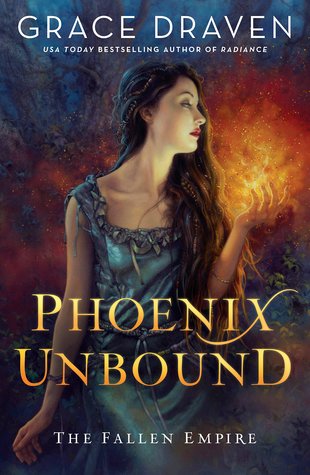
Phoenix Unbound (Fallen Empire #1) by Grace Draven

Synopsis:


Every year, each village is required to send a young woman to the Empire's capital--her fate to be burned alive for the entertainment of the masses. For the last five years, one small village's tithe has been the same woman. Gilene's sacrifice protects all the other young women of her village, and her secret to staying alive lies with the magic only she possesses.

But this year is different.

Azarion, the Empire's most famous gladiator, has somehow seen through her illusion--and is set on blackmailing Gilene into using her abilities to help him escape his life of slavery. And unknown to Gilene, he also wants to reclaim the birthright of his clan.

To protect her family and village, she will risk everything to return to the Empire--and burn once more.


Rating: 🌟🌟🌟


You know what most writers would commit murder for? Killer first chapters. Y'know, the ones that are just so perfect - in pacing, prose, tension - that by the third paragraph the contract is SEALED, kiss your free time good-bye this book is your life now. You know what Grace Draven's got that most writers would commit murder for? Killer first chapters.

Just like with Draven's Radiance, Phoenix Unbound had me gripped by the first chapter. I was intrigued by the brutal world. I loved the subtle differences between Gilene and Azarion's voices, despite their POVs being written in third person. Rarely have I ever seen an author give so much thought to differentiating character's voices in the third person. It's something I only see attempted in first person, and even then writers still fail at it.

So everything was great - until I got to the journey bit. For about 20% of the novel, Gilene and Azarion are just traveling. Like, that's it. They have a few dangerous run-ins, but otherwise the whole journey is so uneventful and their relationship so cliche and boring that I probably would've dnfed the book had I not been reading an ARC copy.

But y'all. Y'ALL. If you can endure through the traveling portion, YOU WILL BE REWARDED. Once Gilene and Azarion reached their destination, all that pacing and world-building and characterization I loved swooped back in even better than the novel's opening. I went from forcing myself to read to forcing myself to shut off my kindle and get my butt to class before I was late.

Draven's world-building is really interesting to me. Her world-building is not the grandiose spectacle that makes me adore other fantasy novels, but backed with such sure detail that the realism is unmatched. There's just so much thought behind how the landscape shapes people's diet and occupation and migratory habits, I'm really in awe of it. It feels like reading historical fiction, that's how detailed it is.

The plot as it picked up towards the end was kind of meh for me, but you're not reading for the plot so much as you are for Gilene and Azarion. As they grew invested in each other, so too did I become invested in them. The ending was a bit of a cop-out, but y'know what, I liked it anyway. From what I've read of Draven's works, she's not writing the next fantasy tome; she's writing romance, set in a well-fleshed out fantasy world. It's not my usual tastes, but I appreciate it for what it is and still enjoyed it.

I think fans of Outlander will really enjoy this novel. I haven't read the books, only watched the first season of the show, but the vibes of this book reminded me of it.

TW: rape, abuse

ARC provided by Berkley Publishing Group via Netgalley in exchange for my honest thoughts and review.

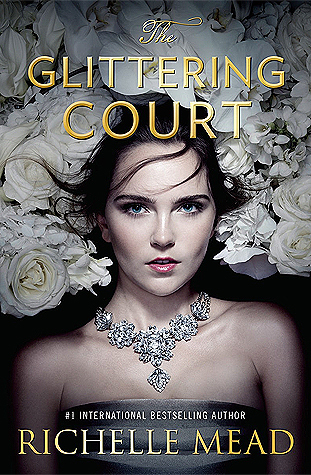
The Glittering Court (The Glittering Court #1) by Richelle Mead

Synopsis:


Big and sweeping, spanning from the refined palaces of Osfrid to the gold dust and untamed forests of Adoria, The Glittering Court tells the story of Adelaide, an Osfridian countess who poses as her servant to escape an arranged marriage and start a new life in Adoria, the New World. But to do that, she must join the Glittering Court.

Both a school and a business venture, the Glittering Court is designed to transform impoverished girls into upper-class ladies who appear destined for powerful and wealthy marriages in the New World. Adelaide naturally excels in her training, and even makes a few friends: the fiery former laundress Tamsin and the beautiful Sirminican refugee Mira. She manages to keep her true identity hidden from all but one: the intriguing Cedric Thorn, son of the wealthy proprietor of the Glittering Court.

When Adelaide discovers that Cedric is hiding a dangerous secret of his own, together they hatch a scheme to make the best of Adelaide’s deception. Complications soon arise—first as they cross the treacherous seas from Osfrid to Adoria, and then when Adelaide catches the attention of a powerful governor.

But no complication will prove quite as daunting as the potent attraction simmering between Adelaide and Cedric. An attraction that, if acted on, would scandalize the Glittering Court and make them both outcasts in wild, vastly uncharted lands…


Rating: 🌟🌟


2.5 stars. This isn't really fantasy. It would be more accurate to call it fantasy lite, or even historical fiction except all the places and people are made up because Richelle Mead was too lazy to do research.

I don't have any beef with Mead, I just think this novel would've been more impressive if it was actually historical fiction.

The Glittering Court started out promising. I had heard it compared to Kiera Cass's The Selection, and I freaking LOVE those books. They're shallow and trashy and full of drama and dresses, and I was hoping this novel would be a better written version of that. It was - for the first fifty pages or so. But by page 200 it was your standard YA romance featuring a romp through the pseudo-American wilderness and the fake Gold Rush.

Yeah, I didn't expect it to go in that direction either.

I can't even compliment the world-building because it's a copy&pasted British colonization of the Americas, complete with native "savages" and religious intolerance, but simplified so Mead didn't have to do as much work through researching. It just makes the world seem lazy, and leaves something of a bad taste in my mouth.

The characters were fine. I didn't feel particularly strongly toward Adelaide, her friends, Cedric, or even the "villain." They weren't bad - except perhaps the villain, they weren't very well developed or complex - but there was nothing remarkable about them either.

Really, what it comes down to is that this novel is boring. I wanted to dnf it at around 300 pages, but I was already 3/4 of the way through so I thought I may as well finish it. Finishing it truthfully made me dislike it more, so maybe I should have dnfed it. The ending felt not only rushed, but I think Mead jumped the shark with the plot points leading up to the ending. It wasn't a good time.

Originally I thought I'd at least try the next book, but after that ending I don't have any desire to spend more time in this world.

The Pisces by Melissa Broder

Synopsis:


Lucy has been writing her dissertation about Sappho for thirteen years when she and Jamie break up. After she hits rock bottom in Phoenix, her Los Angeles-based sister insists Lucy housesit for the summer—her only tasks caring for a beloved diabetic dog and trying to learn to care for herself. Annika’s home is a gorgeous glass cube atop Venice Beach, but Lucy can find no peace from her misery and anxiety—not in her love addiction group therapy meetings, not in frequent Tinder meetups, not in Dominic the foxhound’s easy affection, not in ruminating on the ancient Greeks. Yet everything changes when Lucy becomes entranced by an eerily attractive swimmer one night while sitting alone on the beach rocks.

Whip-smart, neurotically funny, sexy, and above all, fearless, The Pisces is built on a premise both sirenic and incredibly real—what happens when you think love will save you but are afraid it might also kill you.


Rating: 🌟


Let's get something straight right away: normally books like this aren't my thing. I've been trying to read more widely and outside of my comfort zone as of late, but fantasy is still my main jam. It's because of this that I was willing to give The Pisces a shot - it's not what I reach for in terms of genre, but balanced by The Shape of Water vibes that I thought I would enjoy it.

I didn't.

Everything about this book just made me feel gross. The main character, the side characters, even the plot itself made me feel uncomfortable and repulsed. By the time I realized the entire novel was going to be like this, it was too late to turn back; I was halfway through, and I might as well finish to count it towards my reading goal.

I can see why this would be compared to The Shape of Water - both feature a woman that engages in a romantic and sexual relationship with a non-human sea creature. But The Shape of Water is whimsical, funny, diverse, and, most of all, aware of how it fits into conversations about fantasy, race, and sexuality. The Pisces is merman erotica that spends the entire novel justifying animal abuse, pedophilia, and the harmful decisions of its pathetic main character simply because she's a "broken" woman. I say "broken" because I'm still not sure, exactly, what makes her "broken," much less what could possibly justify all the problematic shit she does.

The main character, Lucy, is intensely unlikable. She's a 38-year-old grown-ass woman, and she's still mooching off of her university's grant money for the thesis she's been writing for 9 years. As an undergrad student whose high tuition puts the fear of god in her, her abuse of university funds is deeply offensive to me. Not to mention, Lucy's entire purpose of being graciously invited to live in her half-sister's million dollar house instead of her shithole apartment is to watch her sister's dog, Dominic. Dominic has diabetes, so he needs to be given medication. But instead of taking care of her sister's sick dog, LIKE SHE'S BEING PAID TO DO, Lucy spends the majority of the novel trying to satisfy her libido by having sex with random men who couldn't give two craps about her.

That's right, folks. We get to spend the entire 270 pages watching Lucy's animal abuse unfold. She forgets to walk him, feed him, give him the medication that helps keep him alive. She starts giving him daily tranquilizer pills - overdosing him on the first try and then continuing to up the dosage as he builds resistance to it - so he doesn't bother her. SO HE DOESN'T BOTHER HER. We watch him waste away to nothing while Lucy fucks her merman lover on her sister's white couch during her period, ruining the couch by staining it with her menstrual blood. Sexy, am I right?

And Lucy's therapy group? Don't even get me started. I don't know exactly the policies surrounding therapy groups, but when a 40-year-old woman admits to wanting to have sex with her son's 16-year-old friend, believing that he is attracted to her, nothing is done. Nothing happens. No one says anything. No one calls her out on her deeply, deeply disgusting thoughts. In fact, the other women feel sympathy for her. What the fuck. What the actual fuck.

This book is an absolute garbage fire. A problematic, disgusting dumpster fire. Don't expect to find The Shape of Water here. Go watch the movie. Spend your afternoon elsewhere.

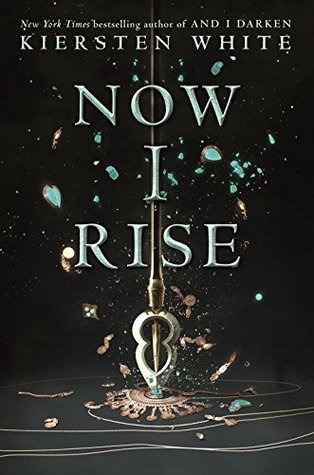
Now I Rise (The Conqueror's Saga, #2) by Kiersten White

Synopsis:


She has no allies. No throne. All she has is what she’s always had: herself.

After failing to secure the Wallachian throne, Lada Dracul is out to punish anyone who dares to cross her blood-strewn path. Filled with a white-hot rage, she storms the countryside with her men, accompanied by her childhood friend Bogdan, terrorizing the land. But brute force isn’t getting Lada what she wants. And thinking of Mehmed brings little comfort to her thorny heart. There’s no time to wonder whether he still thinks about her, even loves her. She left him before he could leave her.

What Lada needs is her younger brother Radu’s subtlety and skill. But Mehmed has sent him to Constantinople—and it’s no diplomatic mission. Mehmed wants control of the city, and Radu has earned an unwanted place as a double-crossing spy behind enemy lines. Radu longs for his sister’s fierce confidence—but for the first time in his life, he rejects her unexpected plea for help. Torn between loyalties to faith, to the Ottomans, and to Mehmed, he knows he owes Lada nothing. If she dies, he could never forgive himself—but if he fails in Constantinople, will Mehmed ever forgive him?

As nations fall around them, the Dracul siblings must decide: what will they sacrifice to fulfill their destinies? Empires will topple, thrones will be won…and souls will be lost.


Rating: 🌟🌟🌟🌟


Me, serving my heart up to Kiersten White on a platter: please let Lada and Radu be happy in the final book PLEASE

This book hurt me. Oh, did this book hurt me. I already thought the events of And I Darken were painful, buT THEN THEY JUST GOT SO MUCH WORSE.

And it's not even just about what happened to the characters that hurts. It seeing the brutality of war. It was watching the siege on Constantinople play out. It was watching the greed of powerful people devour the weaker thousands. This can be a difficult book to stomach, dark in ways not many YA novels are willing to go. I like grimdark fantasy, and this reminds me of that.

Remember how I said I would die for Lada and Radu? I would commit murder for them now. I LOVE THEM. Lada and Radu were already so complex as children in And I Darken, but as they age and the books progress, they only get more complicated and morally gray. There were parts of this novel where I despised my sweet son Radu. Things that turned me against Lada in the first book made me adore her even more deeply in this one. That's a testament to how intricate and real White has made her characters: as easy to love as they are to hate, just like people in real life.

Mehmed, though? He can choke. This book made me fall so hard out of love with Mehmed that the whiplash nearly snapped my neck.

While I think this book came to a more white-knuckled on the last 100 pages conclusion than And I Darken did, Now I Rise does unfortunately suffer from second book syndrome. Y'know, where all the delicious twists you loved in the first book sloooooow down in favor of setting up one, BIG conclusion? And by doing that eliminate a lot of the little plot points that kept the tension in the first book? Now I Rise did manage to shake itself free of that about half-way through, but it still made the first 150-200 pages a bit of a slog to get through.

I also questioned how Lada came to feel so strongly for Hunyadi after only a month or two of knowing him. It took her YEARS to reach a similar level of love towards Mehmed and Radu in the first novel. It just felt a little out of place for her character.

Even though it took a bit too long to warm up, Now I Rise delivered an emotional climax and conclusion that hit infinitely harder than its predecessor. I loved it.